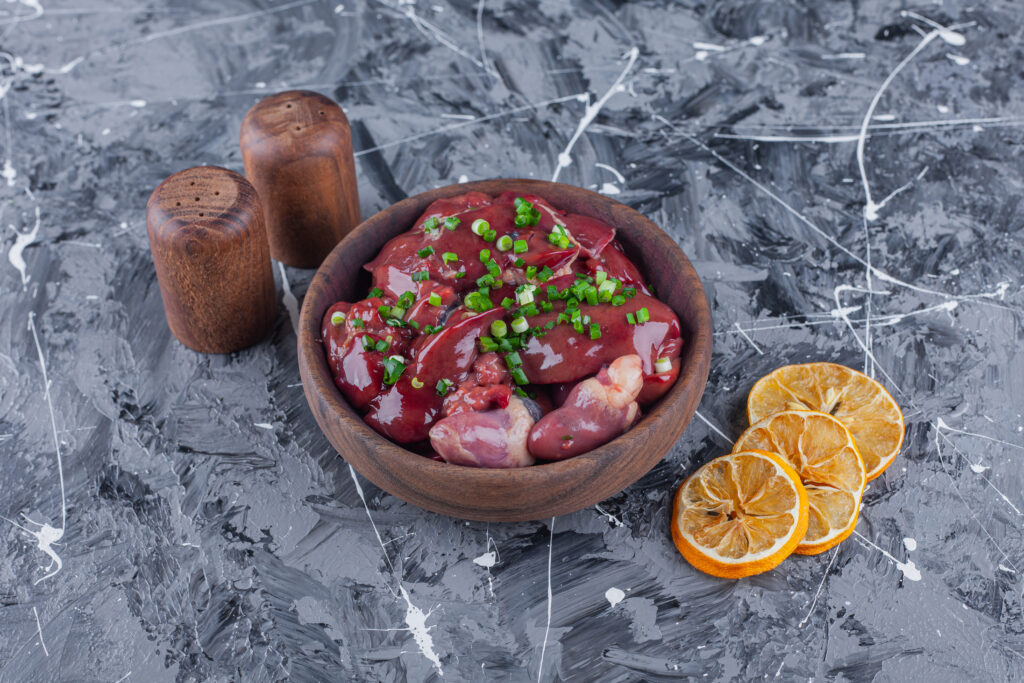
Offal (pronounced “awFul”) are organ meats, and to some they are considered awful.
But to others who have eaten organ meats as part of their cultural food traditions, or when they traveled internationally, or because they were just downright adventurous have found organ meats to be nutritious and tasty.
In fact, organ meats – liver, kidney, tongue, sweetbreads (thymus, pancreas), tripe (intestine), gizzards, spleen, giblets, brains, feet, heart, marrow – are more nutrient dense than muscle meats and not nearly as expensive.
Offal, also called variety meats, cut from beef, lamb, veal, chicken, lamb, duck, goose, turkey, mutton, and pork, are either consumed directly as food or used in the production of other foods.
History
Early humans prized organ meats over other animal parts. They would reach straight for the heart, liver, and kidneys of an animal, often throwing away the muscle meats (like steak) to the dogs.
Perhaps these early humans followed the behaviors of predatory animals who ate their prey’s heart and liver first.
Recently, off the coast of South Africa, two Orcas have been hunting Great White sharks, feasting on their livers and sometimes hearts.
From late 14th century English, offal is said to mean “off-fall,” or what is left after butchering. Before refrigeration was common, these organs would have been eaten first.
Through the mid-20th century old cookbooks were loaded with recipes for all kinds of organ meats.
Nutrient Density
The key is to find offal from grass-fed, pasture raised animals, organic, free from antibiotics, hormones, and other harmful products used in the raising of grain-fed, feedlot animals.
Offal’s nutrition density is due to the plentiful amounts of the fat-soluble vitamins A, D and K2. These three vitamins work together to protect soft tissues from calcification and nourish bones and teeth like no other food can. These vitamins prevent and even repair tooth decay. That’s why organ meats are so important for growing children.
This trio of vitamins also serve as a catalyst for mineral absorption, but they are often absent from the modern diet. For example, many people dependent on a plant-based diet, can’t convert the plant source of vitamin A in carrots, carotene, to retinol to be useful in the body. Others, afraid to eat fats, and other vitamin A rich foods, are depleted of this crucial vitamin.
COQ10 is abundant in heart, liver, and kidney, an essential nutrient for the heart. Also abundant in offal are:
- Tryptophan is an amino acid needed for normal growth in infants and for the production and maintenance of the body’s proteins, muscles, enzymes, andneurotransmitters. It is an essential amino acid. This means your body cannot produce it, so you must get it from your diet.
- Collagen is a protein responsible for healthy joints and skin elasticity, or stretchiness. It’s in your bones, muscles, and blood, comprising three quarters of your skin and a third of the protein in your body. As you age, your existing collagen breaks down, and it gets harder for your body to produce more.
- Elastin is a protein that exists as fibers in the extracellular spaces of many connectivetissues. Its main function is to allow tissues in your body to stretch out and shrink back. Your arteries are tube-shaped blood vessels that carry blood from your heart through your body. Elastin gives your arteries stretchy characteristics that make it easier for your heart to pump blood.
- Glycine is an amino acid, one of 20 used to make proteins in the human body. The body produces it naturally, and it is also found in high-protein foods such as meat.
For Healing
Traditional cultures prized these organs especially for the sick and pregnant women. The peoples in ancient China, Greece, as well as in several Native American and African tribes, believed that eating a specific organ from an animal could heal that same organ in the person consuming it.
In the early twentieth century, some doctors in the U.S., advised patients with heart problems to eat beef heart to strengthen their own heart.
During that time, people in the U.S. and Europe were commonly eating liver once a week. The ancients believed that eating liver would purify and cleanse the body. Modern science confirmed that the liver’s function is to cleanse and detoxify the body.
Today, holistic practitioners carry on the tradition of eating organs by prescribing glandulars – organ extracts. Standard Process is an example of a well-respected supplement company that produces these organ-based supplements called protomorphogens.
Liver
Since liver is considered top of the list for nutrition, we’ll focus on it here. But that doesn’t mean the numerous other offal aren’t also excellent choices.
Of all the livers, beef liver is the best source of vitamins and minerals. Pork and chicken livers are good sources, too.
Here are liver’s nutrients:
- Preformed vitamin A – or retinol – for eye and immune health. Four ounces of beef liver contains 19,000IU of vitamin A (about 400% of the RDA for vitamin A).
- Zinc for immune health and hormone production.
- Choline for cognitive health and cellular membrane support
- Vitamin B12 for cellular energy production and methylation (A chemical reaction in which a small molecule called a methyl group is added to other molecules. Methylation of proteins or nucleic acids may affect how they act in the body.)
- Folate for energy production, methylation, and DNA repair
- Iron for red blood cell production
- Copper for increasing iron absorption in the gut. Copper deficiency can cause anemia, and beef liver is a rare dietary source of copper.
If you can consume a decent hunk of beef liver (4-6 ounces) once a week, you’re set for the week. If you can’t consume this much beef liver at one sitting, break the six ounces down into a couple or three servings a week.
The key to preparation is herb and spices to tame the gamey, pungent, and earthy properties of offal.
Here’s one way to prepare liver:
- First soak in milk or lemon juice (with water) to remove bitterness (20 min).
- Cut liver (or ask your butcher) into thin strips and season with spices such as turmeric, rosemary, oregano, thyme, salt, pepper, etc.
- In a pan, heat butter or other healthy cooking oil to medium heat.
- Cook liver and both sides 1-2 minutes until pink in the middle.
Another way to prepare is to ask your butcher to grind up your liver with grass-fed ground beef and use in your favorite recipes. (In this way, you can also add other offal such as heart and kidney.) Experiment with rates. You might start with 30% offal, and 70% ground beef.
Buy sausages made with organ meats: https://grasslandbeef.com/organs-organ-sausages
- Braunschweiger. Traditional German sausage made from beef trim and beef liver.
- Headcheese. A combination of beef trim, heart, tongue plus a combination of bright spices.
- Liverwurst. A mix of trim, liver, heart, and kidney.
Make a pate using chicken livers, such as the one described in this video:
And, then there’s the Jewish delicacy, chopped liver. Try making this classic.
https://www.seriouseats.com/chopped-liver
Other Ways to Incorporate Organ Meats in Your Diet
Seasoning. EatPluck.com makes a grass-fed, no hormones or gmos, seasoning, which includes onion, beef organ meat blend (liver, kidney, spleen, heart, pancreas) Redmond Real Salt, smoked paprika, lemon peel, garlic, parsley, mustard seed, thyme.
Supplements. A good source to learn about supplements
https://radiantlifecatalog.com/search.php?search_query=liver§ion=product
More Recipes – https://offallygoodcooking.com/